1 / 10Select main photo to view original
TUNNEL LINING TROLLEY
Tunnel lining trolley
Applications
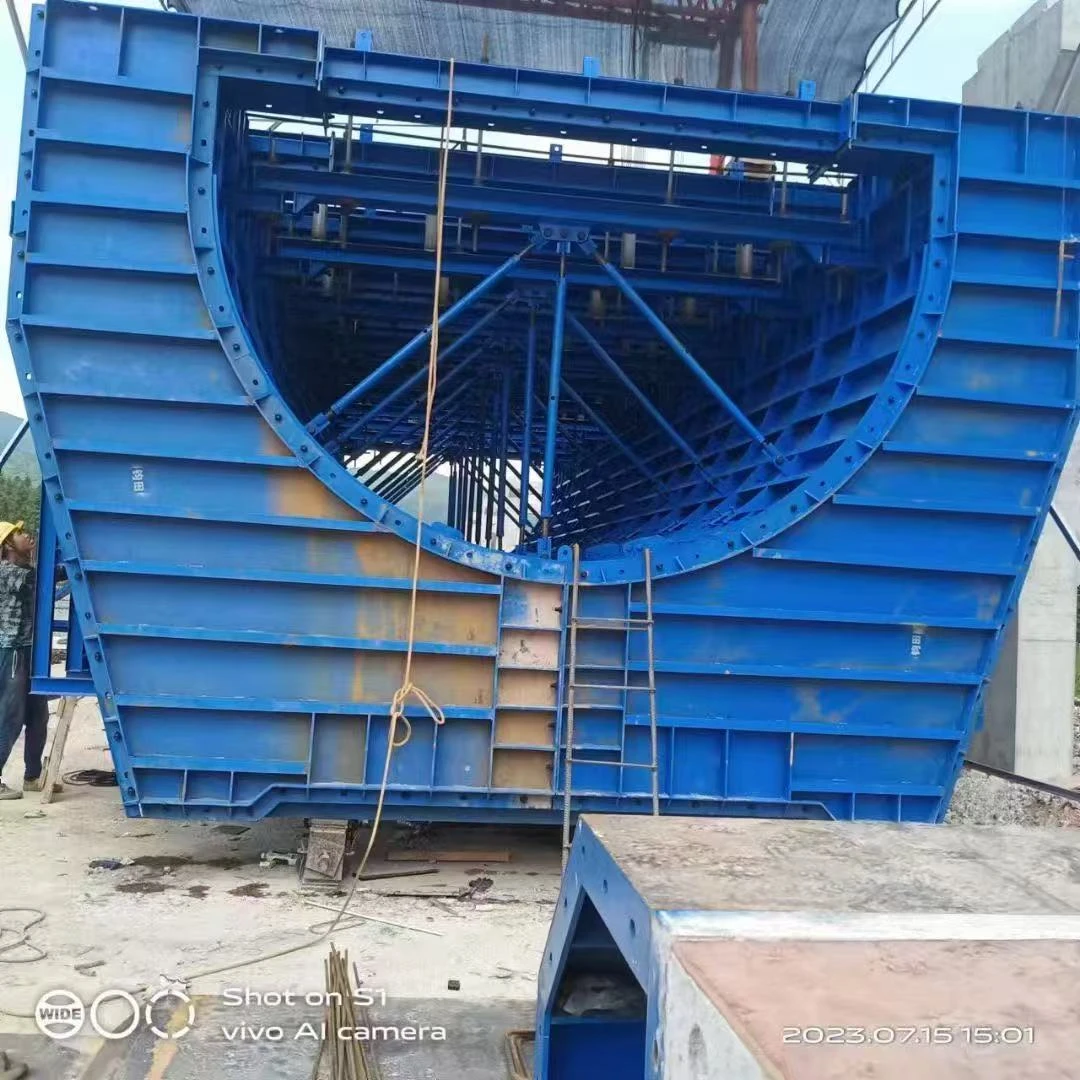
The fully automatic hydraulic needle beam trolley is used for full-section concrete lining in circular, horseshoe-shaped and other hydraulic tunnels. A longitudinal needle beam provides the load-bearing and guiding core, surrounded by segmented forms. A central hydraulic system operates form setting, stripping and movement within the casting cycle. Xinhang coordinates the trolley configuration around lining geometry, tunnel diameter changes and casting length, checking needle beam span, panel divisions and hydraulic expansion and retraction together.
Suitable applications
Xinhang features
01 Needle beam core with alternating support
The needle beam supports the forms and serves as the travel track. The forms and beam are anchored alternately and move relative to each other for self-propelled stepping, reducing manual handling and repeated track assembly between cycles.
02 Central control of hydraulic setting and stripping
Grouped cylinders expand and retract the crown, side and invert forms. Screw jacks lock the positioned forms and share the load. Setting and stripping are controlled from a central console to support consistent lining geometry and thickness.
03 Full-section casting with a coordinated cycle
The invert, sidewalls and crown are formed in one casting operation. Stripping follows the crown, sides and finally invert sequence, coordinated with working windows, vibration and crown grouting.
Technical applications
Panel details coordinated around the structure and construction method.
Needle beam and frame roller system
Check needle beam length and stiffness against form length. Upper and lower roller assemblies and the frame carry loads alternately; verify beam deflection and centreline deviation during travel.
Panel divisions and joints
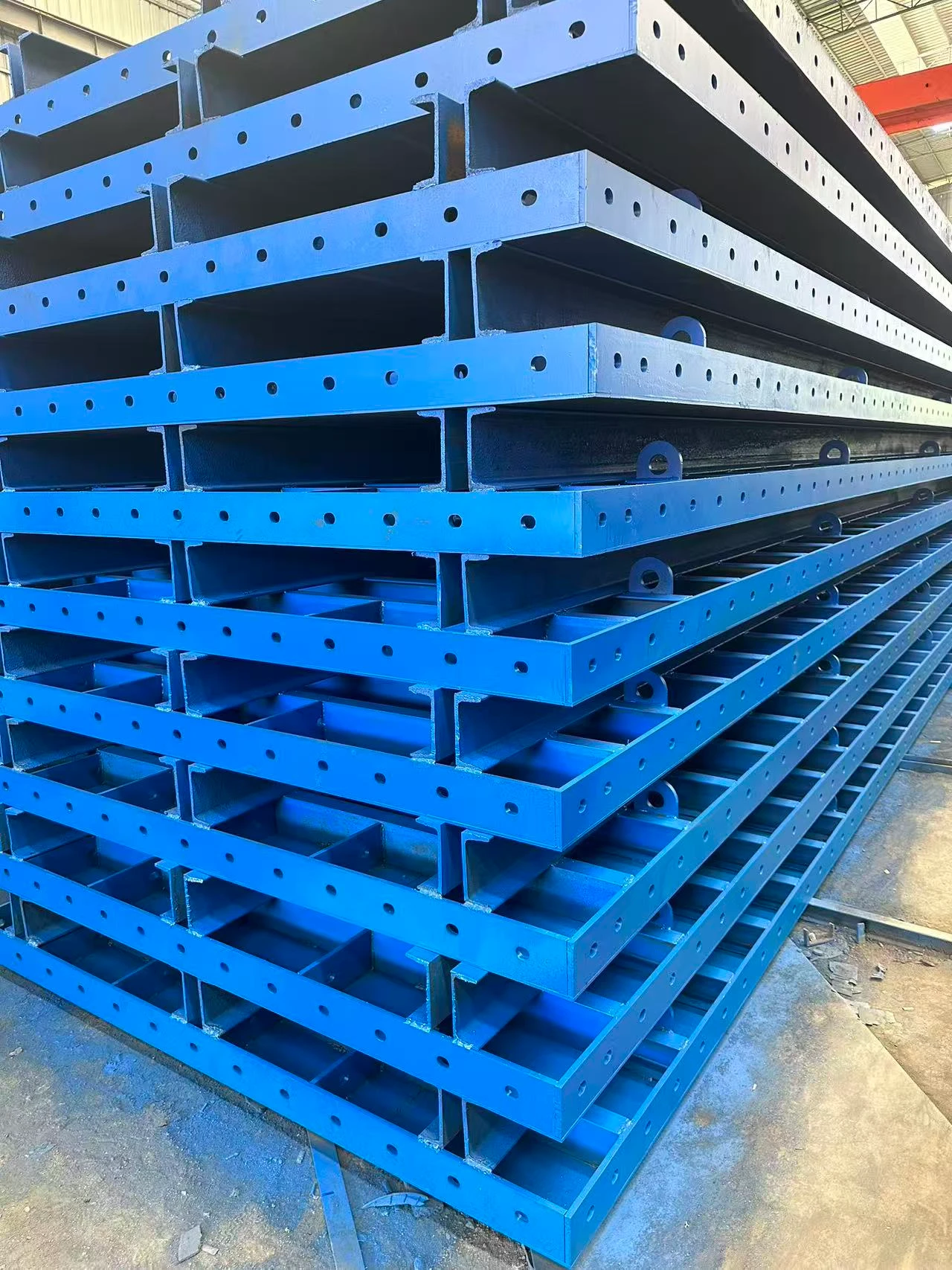
Segment crown, left and right side, and invert forms to match tunnel curvature. Bolt and trial-fit panels to check steps and joints, with separate panels for curves and diameter transitions.
Hydraulic movement and positioning locks
Grouped cylinders control opening, closing and lifting. Recheck centreline, level and section after positioning; casting loads are verified in the project-specific scheme.
Uplift restraint and crown grouting
Assess uplift and asymmetric casting loads separately. Coordinate hold-downs and tie systems with the casting sequence, and provide crown vents and grout ports to suit the method.
Specifications & photos
Configuration essentials and product photographs
- Structure
- Full-section concrete lining of hydraulic tunnels
- Geometry inputs
- Tunnel diameter, circular or horseshoe section, and lining thickness
- Construction inputs
- Casting length, gradients, curves, placement and vibration methods
- Configuration
- Needle beam span, hydraulic power unit and travel method agreed per project
Tunnel lining trolley · 01Tunnel lining trolley · 02Tunnel lining trolley · 03Tunnel lining trolley · 04Tunnel lining trolley · 05Tunnel lining trolley · 06Tunnel lining trolley · 07Tunnel lining trolley · 08Tunnel lining trolley · 09Tunnel lining trolley · 10Selection and technical discussion
Provide lining sections, tunnel diameters and transitions, casting length, gradients, curves, and placement and vibration methods. Confirm needle beam length, cylinder groups, uplift restraint and guidance and positioning arrangements in the project scheme.
Dimensions, performance and supply scope follow project drawings and the agreed scheme.
Common questions
What is tunnel lining trolley used for?
The fully automatic hydraulic needle beam trolley is used for full-section concrete lining in circular, horseshoe-shaped and other hydraulic tunnels. A longitudinal needle beam provides the load-bearing and guiding core, surrounded by segmented forms. A central hydraulic system operates form setting, stripping and movement within the casting cycle. Xinhang coordinates the trolley configuration around lining geometry, tunnel diameter changes and casting length, checking needle beam span, panel divisions and hydraulic expansion and retraction together.
What are the main features of tunnel lining trolley?
Needle beam core with alternating support: The needle beam supports the forms and serves as the travel track. The forms and beam are anchored alternately and move relative to each other for self-propelled stepping, reducing manual handling and repeated track assembly between cycles. Central control of hydraulic setting and stripping: Grouped cylinders expand and retract the crown, side and invert forms. Screw jacks lock the positioned forms and share the load. Setting and stripping are controlled from a central console to support consistent lining geometry and thickness. Full-section casting with a coordinated cycle: The invert, sidewalls and crown are formed in one casting operation. Stripping follows the crown, sides and finally invert sequence, coordinated with working windows, vibration and crown grouting.
What should be confirmed when specifying tunnel lining trolley?
Provide lining sections, tunnel diameters and transitions, casting length, gradients, curves, and placement and vibration methods. Confirm needle beam length, cylinder groups, uplift restraint and guidance and positioning arrangements in the project scheme.