1 / 4Select main photo to view original
T-BEAM STEEL FORMWORK
T-beam steel formwork
Applications
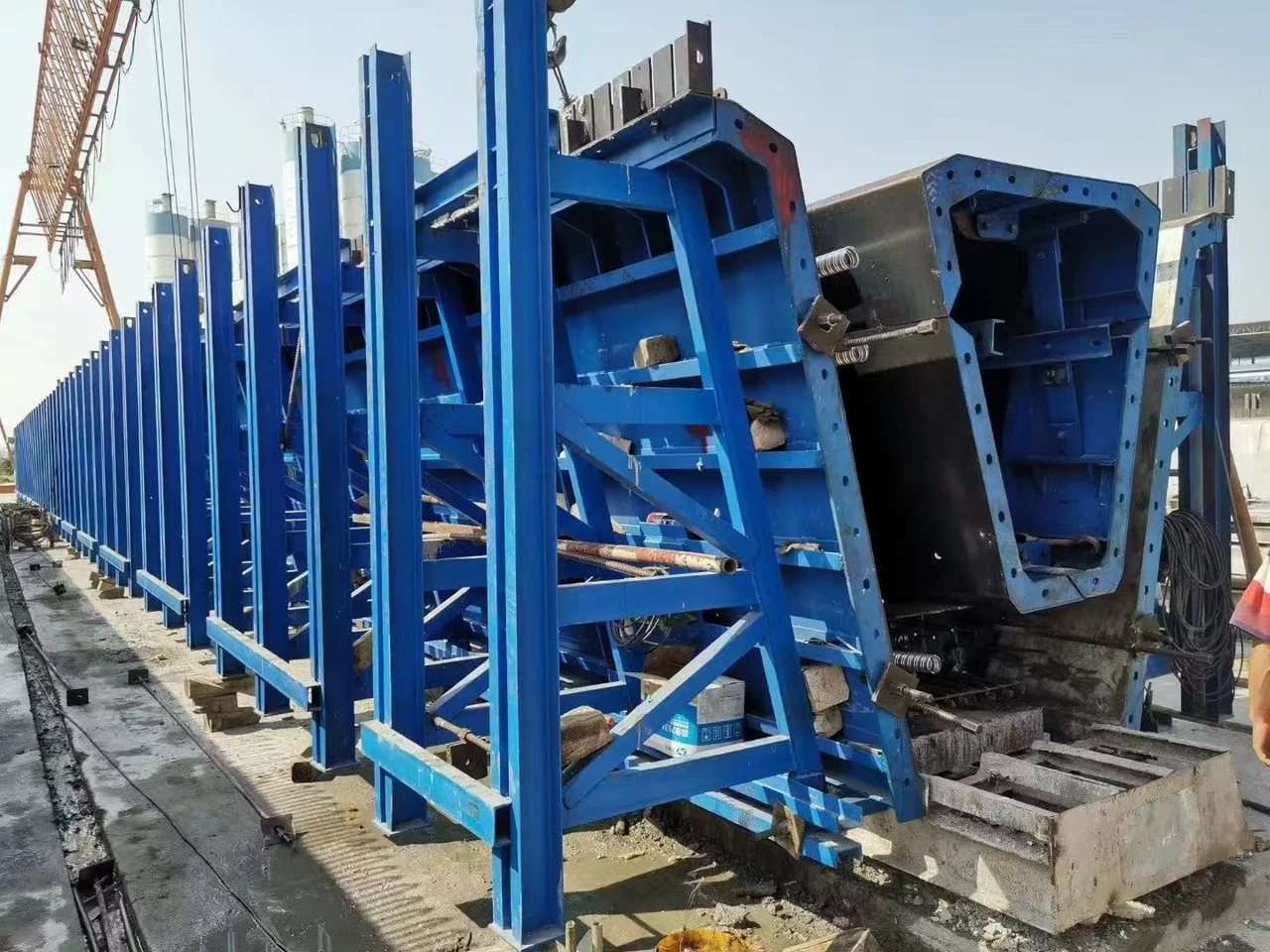
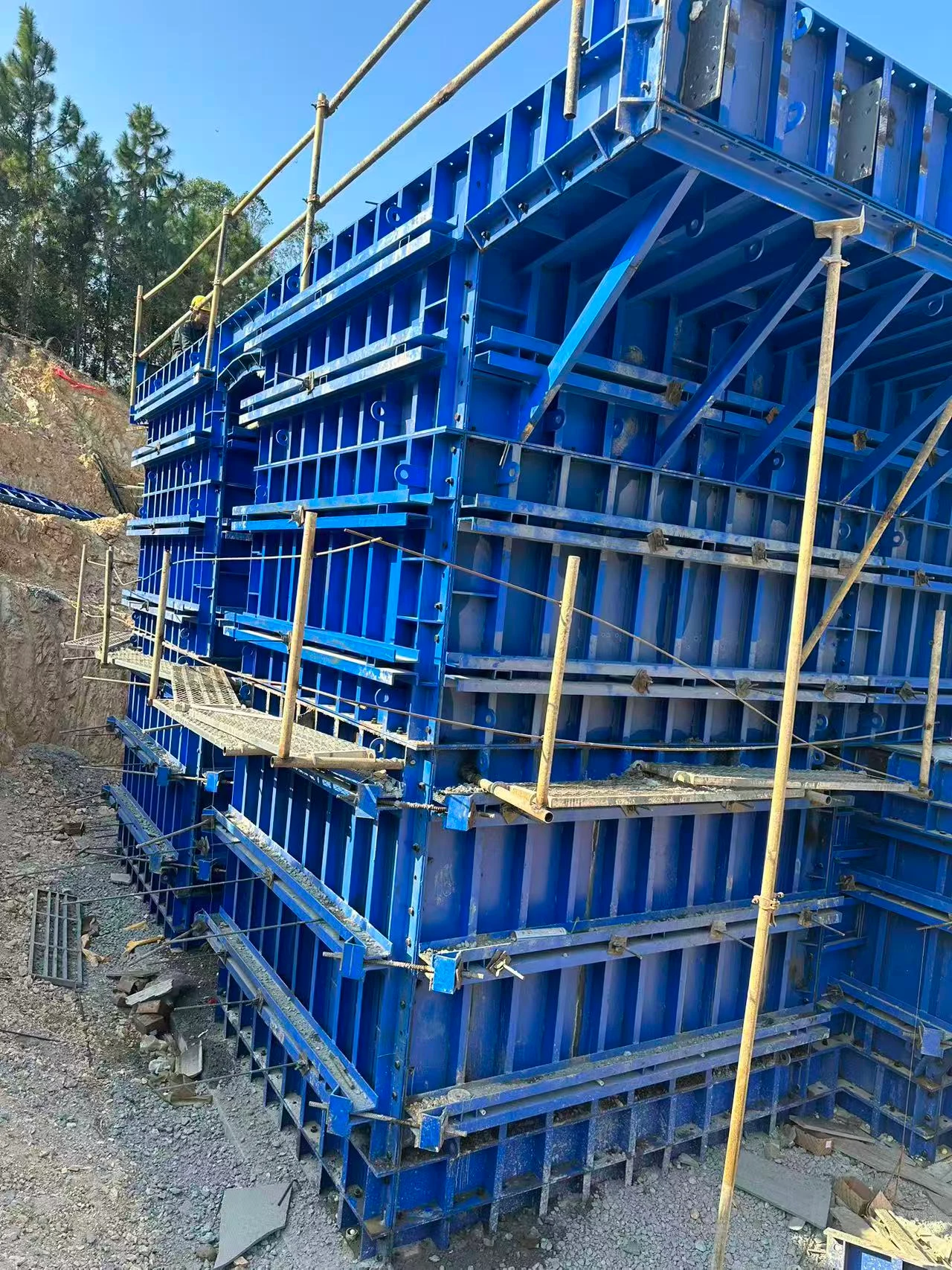
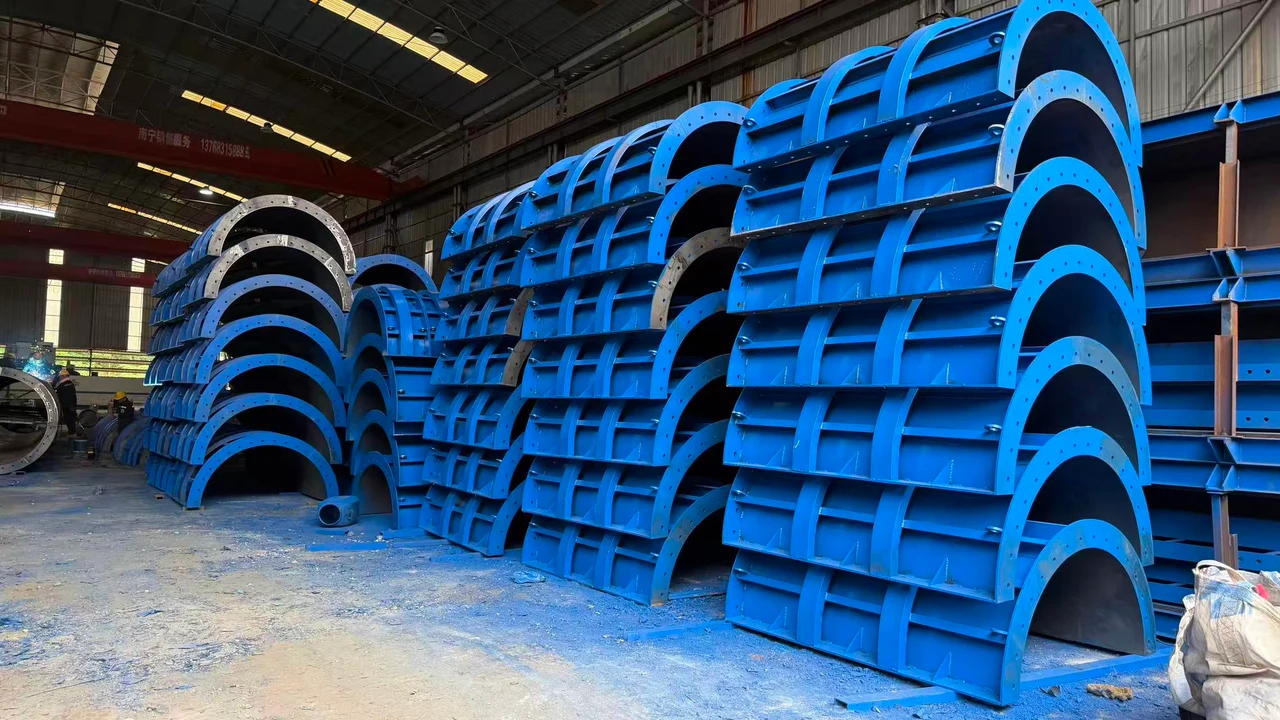
T-beam forms shape precast concrete bridge girders. Xinhang coordinates side and end forms around girder length, depth, web and flange dimensions, considering casting beds, tendon ducts, anchorage zones, embedded items and stripping access.
Suitable applications
Xinhang features
01 Girder geometry and end details
Distinguish internal and edge girders and end variations. Check flange width, diaphragms and anchorage interfaces for each girder type.
02 Segmented forms for yard operations
Plan side-form segments, joints and stripping sequence around casting beds and lifting equipment, coordinating reinforcement installation and concrete placement.
03 Finish and geometry control
Trial assembly checks side profiles, joints, flanges and end positioning. Inspect panels and connections during reuse to limit steps, leakage and accumulated deformation.
Technical applications
Panel details coordinated around the structure and construction method.
Side and flange forms
Check web, lower bulb and flange profiles against girder drawings, including corners and diaphragms.
End forms and tendon interfaces
Coordinate end openings, anchorage plates and duct positions with reinforcement and prestressing designs.
Casting beds and camber
Soffit profile and camber follow design and construction requirements; verify casting-bed datums during assembly.
Vibration and stripping access
Provide access for the chosen construction method; stripping sequence and concrete strength follow the project scheme.
Specifications & photos
Configuration essentials and product photographs
- Girder type
- Concrete bridge T-beams
- Form components
- Sides, ends and flange forming areas
- Geometry inputs
- Length, depth, web and flange dimensions
- Interfaces
- Beds, diaphragms, anchorage and embedded items
T-beam steel formwork · 01T-beam steel formwork · 02T-beam steel formwork · 03T-beam steel formwork · 04Selection and technical discussion
Provide girder drawings, lengths, depths, edge/internal quantities, casting-bed conditions and anchorage details. Confirm thickness, segments, connections and stripping arrangements per scheme.
Dimensions, performance and supply scope follow project drawings and the agreed scheme.
Common questions
What is t-beam steel formwork used for?
T-beam forms shape precast concrete bridge girders. Xinhang coordinates side and end forms around girder length, depth, web and flange dimensions, considering casting beds, tendon ducts, anchorage zones, embedded items and stripping access.
What are the main features of t-beam steel formwork?
Girder geometry and end details: Distinguish internal and edge girders and end variations. Check flange width, diaphragms and anchorage interfaces for each girder type. Segmented forms for yard operations: Plan side-form segments, joints and stripping sequence around casting beds and lifting equipment, coordinating reinforcement installation and concrete placement. Finish and geometry control: Trial assembly checks side profiles, joints, flanges and end positioning. Inspect panels and connections during reuse to limit steps, leakage and accumulated deformation.
What should be confirmed when specifying t-beam steel formwork?
Provide girder drawings, lengths, depths, edge/internal quantities, casting-bed conditions and anchorage details. Confirm thickness, segments, connections and stripping arrangements per scheme.