1 / 6Select main photo to view original
BOX GIRDER STEEL FORMWORK
Box girder steel formwork
Applications
Pull-out box girder inner formwork forms the cells of precast box girders. Crown, movable side and bottom corner panels are joined by hinges, hydraulic cylinders and linkages. Once the concrete reaches the required strength, the panels fold and retract in sections and the assembly is withdrawn longitudinally before moving to the next girder position. Xinhang plans panel divisions and withdrawal paths around cell clearance, section changes, access holes and end openings, coordinating uplift restraint, positioning and efficient stripping.
Suitable applications
Xinhang features
01 Folding retraction and assembly withdrawal
Cylinders and linkages retract the side and bottom corner panels inward in sequence. Once clear of the concrete, the assembly is withdrawn longitudinally along the main beam guide rails, avoiding individual panel dismantling inside the cell and making stripping labour and time easier to manage.
02 Grouped hydraulic actuation
Lifting, lateral and folding cylinders operate in groups. Stops and guides coordinate closing, expansion and retraction, with a defined sequence and centralised operation to reduce manual assembly errors.
03 Uplift restraint and cell geometry control
Vertical ties, hold-downs and supports locate the inner forms against uplift and asymmetric casting loads. Web thickness, cell clearance and top slab thickness are checked within the same formwork layout.
Technical applications
Panel details coordinated around the structure and construction method.
Panel divisions and retraction stroke
Set panel divisions and hinge positions for single-cell or multicell geometry and section changes. Check cylinder retraction stroke and ensure the collapsed section fits through the access hole or end opening for withdrawal.
Withdrawal rails and traction
Coordinate the main beam, guide rails and support rollers. After retraction, the traction system withdraws the forms longitudinally; verify rail gradients, joints and required pulling force.
Uplift restraint and tie reinforcement
Assess casting uplift and sequence in the project-specific scheme. Coordinate vertical ties, hold-downs and supports to prevent the inner forms from lifting or shifting.
Form positioning and joints
After closing, check top slab and web profiles and embedded provisions. Trial-fit panel joints and check steps; clean and inspect hinges, cylinders and linkages after each cycle.
Specifications & photos
Configuration essentials and product photographs
- Structure
- Cells of precast box girders
- Form components
- Crown, movable side and bottom corner forms, cylinders, linkages and withdrawal main beam
- Design inputs
- Cell clearance, slab thickness, section changes, access holes and girder end openings
- Key checks
- Retraction stroke, uplift restraint, positioning and withdrawal path
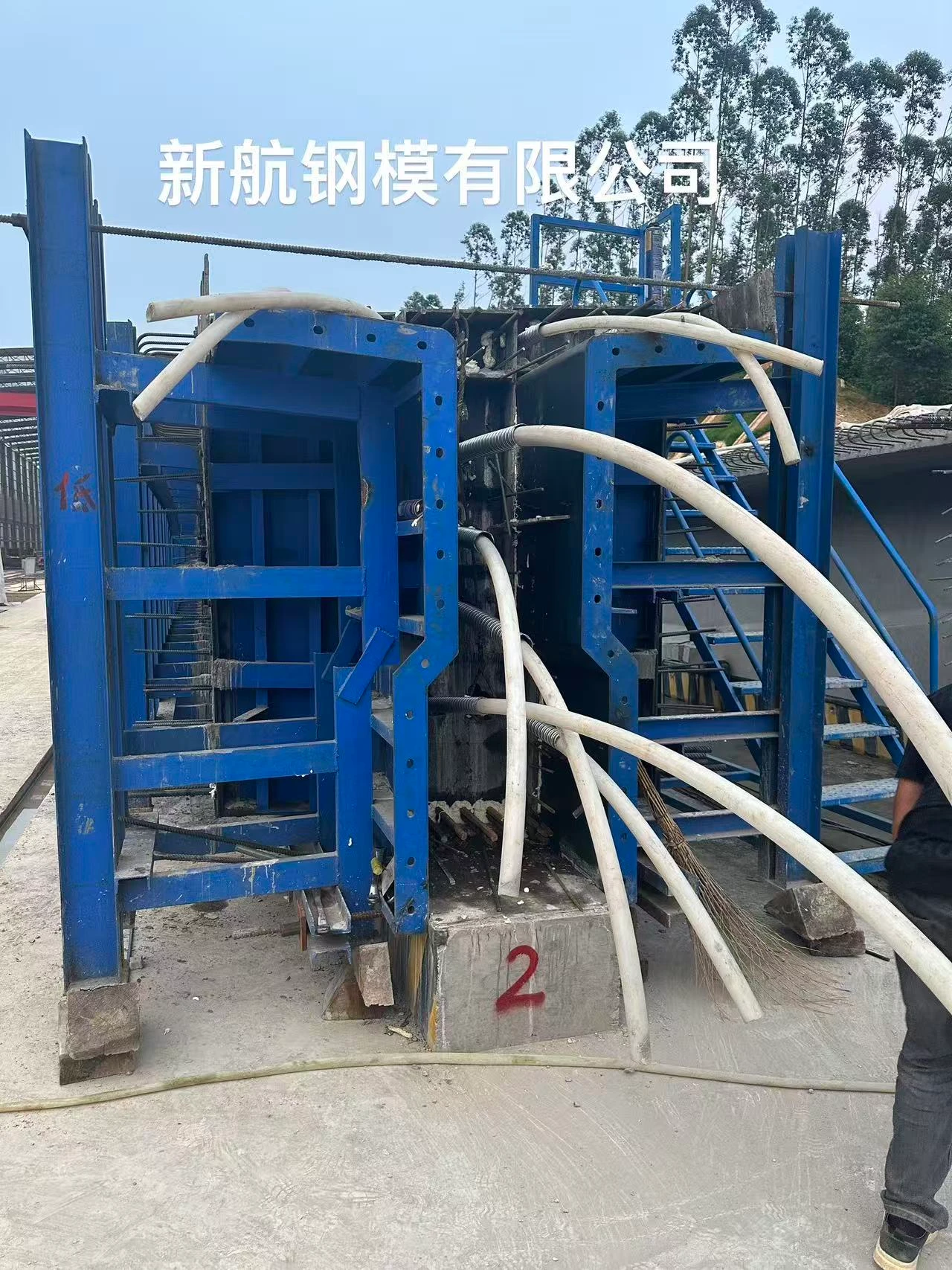
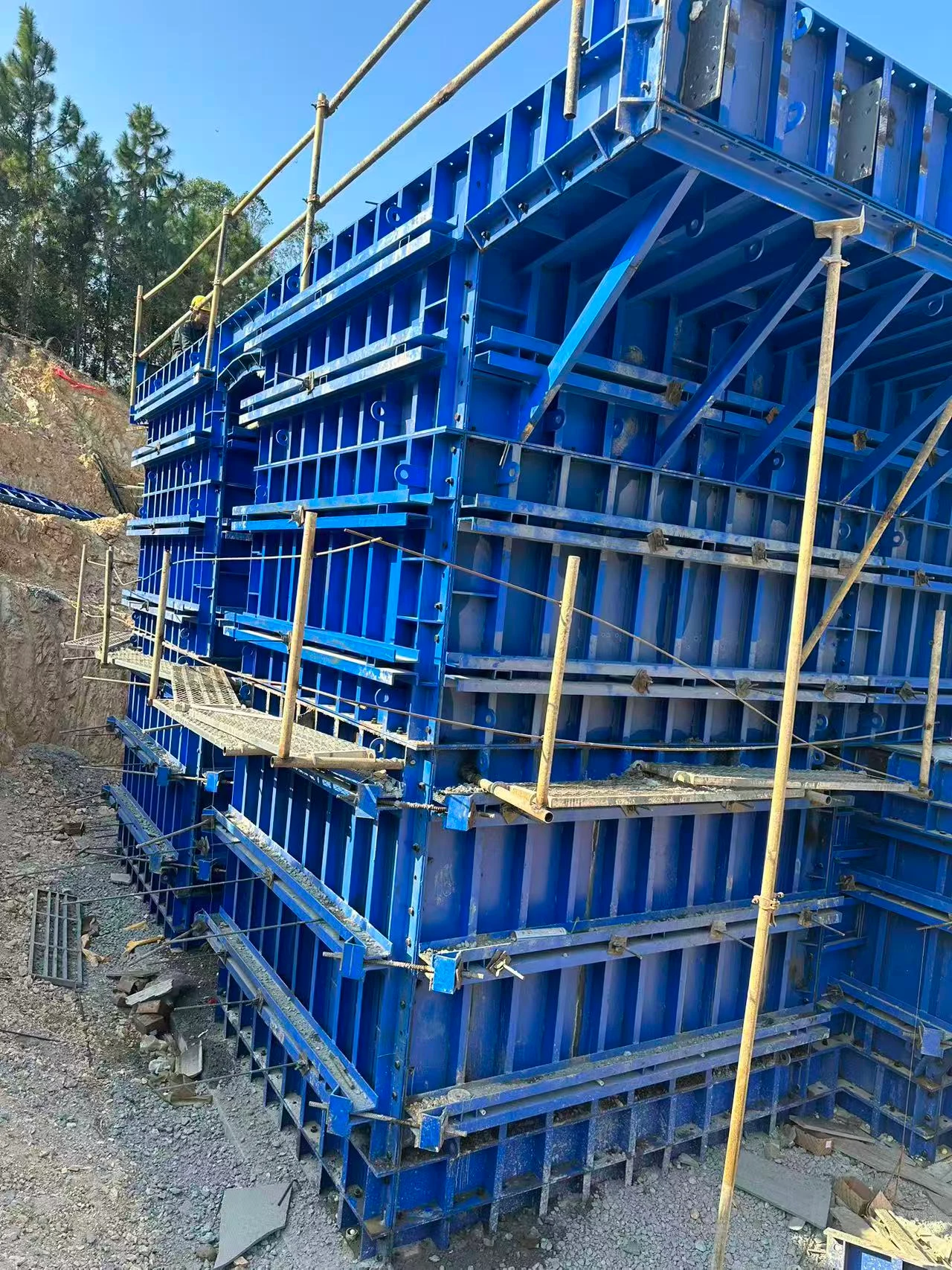
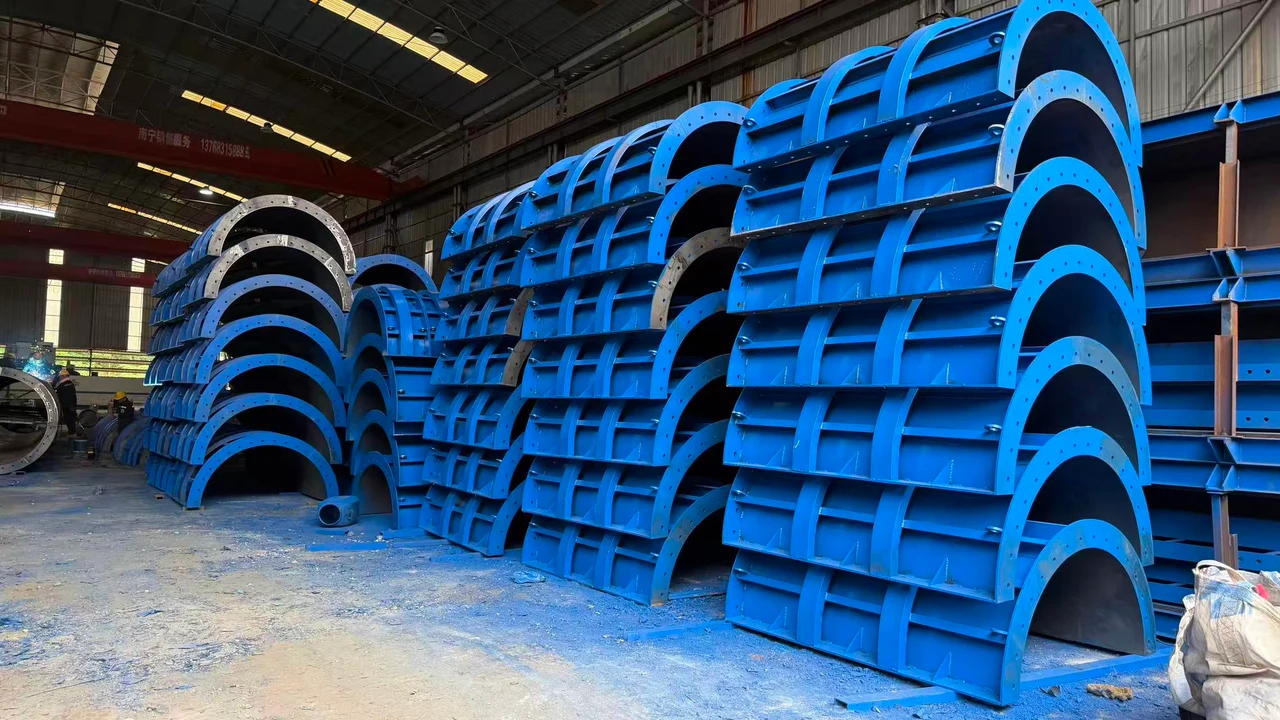
Box girder steel formwork · 01Box girder steel formwork · 02Box girder steel formwork · 03Box girder steel formwork · 04Box girder steel formwork · 05Box girder steel formwork · 06Selection and technical discussion
Provide cross-sections and longitudinal drawings, cell and access-hole dimensions, prestressing and embedded-item details, casting-bed layout and placement method. Confirm panel divisions, hydraulics, withdrawal direction and traction method in the project scheme.
Dimensions, performance and supply scope follow project drawings and the agreed scheme.
Common questions
What is box girder steel formwork used for?
Pull-out box girder inner formwork forms the cells of precast box girders. Crown, movable side and bottom corner panels are joined by hinges, hydraulic cylinders and linkages. Once the concrete reaches the required strength, the panels fold and retract in sections and the assembly is withdrawn longitudinally before moving to the next girder position. Xinhang plans panel divisions and withdrawal paths around cell clearance, section changes, access holes and end openings, coordinating uplift restraint, positioning and efficient stripping.
What are the main features of box girder steel formwork?
Folding retraction and assembly withdrawal: Cylinders and linkages retract the side and bottom corner panels inward in sequence. Once clear of the concrete, the assembly is withdrawn longitudinally along the main beam guide rails, avoiding individual panel dismantling inside the cell and making stripping labour and time easier to manage. Grouped hydraulic actuation: Lifting, lateral and folding cylinders operate in groups. Stops and guides coordinate closing, expansion and retraction, with a defined sequence and centralised operation to reduce manual assembly errors. Uplift restraint and cell geometry control: Vertical ties, hold-downs and supports locate the inner forms against uplift and asymmetric casting loads. Web thickness, cell clearance and top slab thickness are checked within the same formwork layout.
What should be confirmed when specifying box girder steel formwork?
Provide cross-sections and longitudinal drawings, cell and access-hole dimensions, prestressing and embedded-item details, casting-bed layout and placement method. Confirm panel divisions, hydraulics, withdrawal direction and traction method in the project scheme.